Team

The people behind the project

A computer science group at the University of Washington Tacoma, working with scientists at Sage Bionetworks, the nonprofit behind the Synapse data platform.

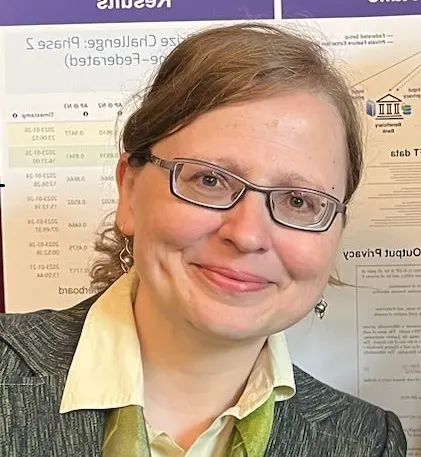
Martine De Cock

Principal Investigator

Martine De Cock holds a M.Sc. and a Ph.D. degree in Computer Science from Ghent University (Belgium). She is a professor at the School of Engineering and Technology, University of Washington Tacoma (USA), as well as a guest professor at Ghent University. Her previous work experiences include positions as a research assistant and a postdoctoral fellow supported by the Fund for Scientific Research - Flanders, a visiting scholar in the BISC group at the University of California, Berkeley (USA), a visiting scholar at the Knowledge Systems Laboratory at Stanford University (USA), and an associate professor at the Department of Applied Mathematics, Computer Science and Statistics at Ghent University.

She has over 200 peer reviewed publications in international journals and conferences on artificial intelligence, data mining, machine learning, information retrieval, web intelligence and logic programming. She is a program committee member of numerous international conferences and has served as an associate editor of IEEE Transactions on Fuzzy Systems. She co-organized the KDDCup2013. Her current research interests are privacy preserving machine learning, and AI for healthcare.

Personal website
Martine De Cock's website

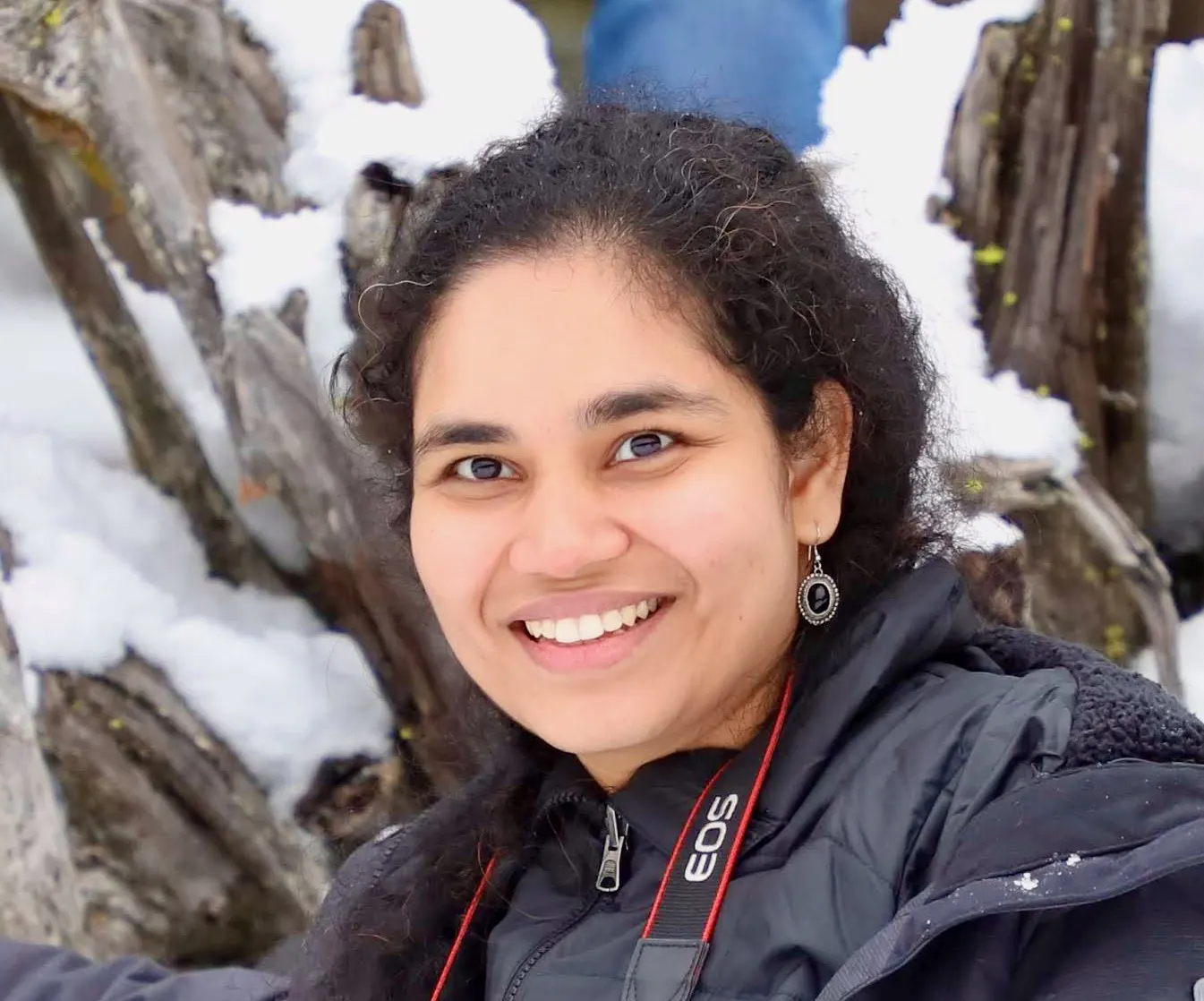
Sikha Pentyala

Assistant Professor

Sikha Pentyala is an Assistant Professor (tenure-track) at the School of Engineering & Technology, University of Washington Tacoma, an affiliated member of the eScience Institute at UW Seattle and of the Responsible Health AI Lab (RHAIL) at UW Tacoma, and a member of the Privacy Preserving Machine Learning (PPML) Lab. Pentyala’s research focus is on responsible and trustworthy AI, spanning privacy, auditing, and safety. Most of this work is on privacy-preserving synthetic data generation and on auditing AI systems, with applications in healthcare and genomics.

Pentyala is also a Staff Research Scientist at the UW School of Nursing, and from July 2025 to July 2026 was a Postdoctoral Researcher at the UW eScience Institute and UW Tacoma. Pentyala completed a Ph.D. at UW Tacoma in 2025, advised by Martine De Cock and Anderson Nascimento, with research internships at Mila – Québec AI Institute under Golnoosh Farnadi (2021–2022) and at JPMorgan Chase as an AI Research Associate (2023 and 2024), and received the 2023 JP Morgan Chase PhD Fellowship for research on synthetic data generation. Before graduate school, Pentyala spent seven years as a Scientific Officer at the Nuclear Power Corporation of India.

Personal website
Sikha Pentyala's website

Daniil Filienko

PhD Student

Daniil Filienko is a PhD student in Computer Science & Systems at UW Tacoma (expected 2028), building privacy-preserving machine learning for healthcare, from differentially private synthetic data to LLM-powered clinical tools and self-improving agentic systems. On this project, Filienko built a way for several data custodians to train one RNA-seq generator together under secure multi-party computation (Journal of Computational Biology, 2026). Outside the project, Filienko has led interdisciplinary teams building a multilingual LLM assistant for tuberculosis treatment and a chatbot that helps family caregivers.

Filienko holds a BS (2023, magna cum laude) and an MS (2025) from UW Tacoma, and was named to the UW Husky 100 in 2025. Internships include Microsoft’s MSAI team (self-improving agentic systems, 2026), Zillow (2025, with a privacy-focused project starting in 2026), the Research Center Trustworthy Data Science and Security (differentially private synthetic data with large language models, 2025), and the FDA as an ORISE Fellow, evaluating a medical synthetic image generator (2024).

Personal website
Daniil Filienko's website

Steven Golob

PhD Student

Steven Golob is a PhD candidate at UW Tacoma, advised by Martine De Cock. He studies what a synthetic data release gives away about the people in it, by building attacks and using them as measuring instruments. A membership inference attack tells whether a person’s record was used to train the generator, and a reconstruction attack fills in values about a person that were never published. His attack MAMA-MIA won the 2023 SNAKE challenge and appeared at IEEE SaTML 2025, and the group’s reconstruction attacks won NIST’s 2025 Collaborative Research Cycle (PoPETs 2027).

On this project he audits synthetic genomic data, so that a data owner knows what a synthetic release risks before sharing it. scMAMA-MIA (NeurIPS 2026) is a membership inference attack on synthetic single-cell RNA-seq data, where earlier attacks had done little better than guessing against state-of-the-art generators. It won Track 2 of the CAMDA 2026 Health Privacy Challenge. Leakage grows as the number of donors shrinks, so the small cohorts common in single-cell research carry the most risk. Before the PhD, he wrote software for Boeing’s flight simulator.

Personal website
Steven Golob's website

Geetha Sitaraman

PhD Student

Luca Foschini

Co-Principal Investigator

Jineta Banerjee

Principal Scientist

Ann Novakowski

Governance Innovation

Sasha Scott

Research Scientist

Gallery

The group at work

More photos and group news are on the PPML group page.