
NSF EAGER · NAIRR Pilot · Award #2451163

Open replicas of locked biomedical data

Genomic data on rare diseases sits in separate, access-controlled repositories, where AI researchers can neither find it nor try it. We build tools that let those repositories train one synthetic data generator together, without any of them disclosing a record. Then we attack the synthetic data ourselves to measure what it still reveals about donors.

Fig. 1Each value is split into three shares that sum to it. Hover a share to slow things down and read it.

The problem

Why the data is dark

AI methods depend on data, and much of the most valuable biomedical data sits behind access controls because it is sensitive. A researcher who wants to work with a rare disease cohort signs a data use agreement and waits for a committee to review the request, all before seeing a single row. The data is hard to find, hard to inspect and hard to reuse. Our award abstract calls it dark data.

Rare diseases make this worse. For a condition such as neurofibromatosis type 1 (NF1) or acute myeloid leukemia, the existing data is minimal, and it is fragmented across custodians who cannot pool what they hold.

Our answer is a synthetic replica: an artificial dataset, made of generated records, that keeps the statistical structure of the original. A replica that protects its donors can be open, so anyone can find it, inspect it, critique it and reuse it.

A replica is worth releasing only if it is both useful and safe, and each of those costs some of the other. The project works on both: generating synthetic genomic data that keeps the biology, across repositories that never show each other their records, and then measuring what the result gives away.

Funded by
National Science Foundation, award #2451163
Program
EAGER, National AI Research Resource (NAIRR) Pilot
Runs
April 2025 to June 2027
Who
University of Washington Tacoma and Sage Bionetworks
Data
Rare diseases, starting with NF1

Video

The project on film

UW Tacoma made a video about the group and this line of work.

Accelerating healthcare breakthroughs through privacy-preserving AI. Video by University of Washington Tacoma.Watch on YouTube

The people

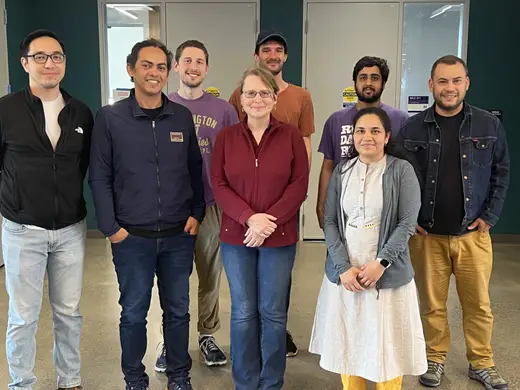
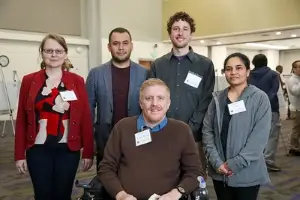
UW Tacoma and Sage Bionetworks

Meet the team →

Results so far

Tested in public

Competitions score synthetic data and privacy attacks on data the entrants have never seen, which makes them the closest thing this field has to an outside check.

PrizeiDASH Privacy & Security Workshop · 2026

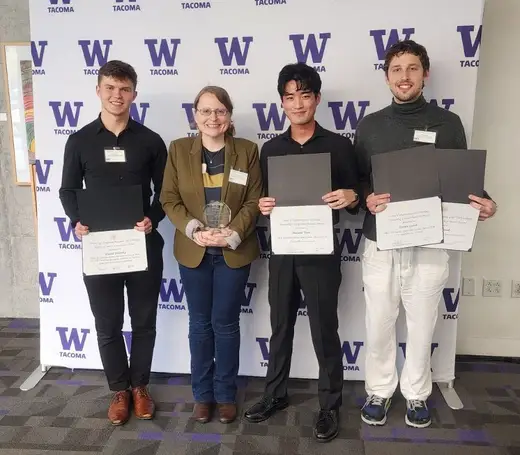
First place, iDASH 2026 Secure Genome Analysis Competition, Track 3

Team PPML Huskies won the track on accelerating deep learning under secure multi-party computation (MPC). Each team ran a drug-target interaction predictor on secret shares held by two parties. Entries had to stay within 2% of the original model’s accuracy and were ranked by speedup.

PrizeCAMDA at ISMB · 2026

First prize, CAMDA 2026 Health Privacy Challenge, Track 1

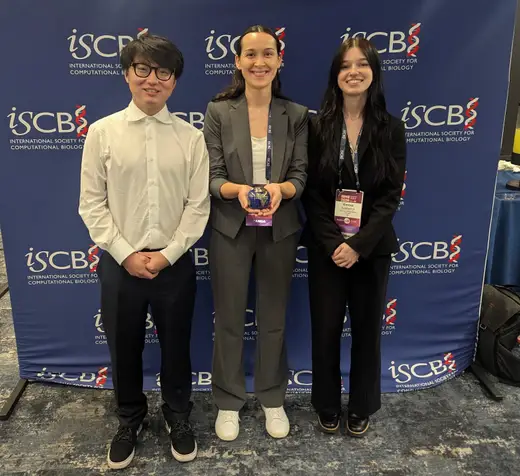
Awarded for “Does Synthetic Bulk RNA-seq Data Protect Donors? Privacy Auditing through Membership Inference Attacks.” The talk also won best presentation at the CAMDA workshop.

PaperJournal of Computational Biology · 2026

Federated Generation of Synthetic RNA-seq Data

Several data custodians train one RNA-seq generator together using secure multi-party computation, so that no custodian discloses its records to the others or to a server. Also given as a talk at RECOMB-Privacy 2026.

All papers, prizes and press →

Try it

Run the demo on the NAIRR Pilot

The sandbox runs a synthetic data generation exercise on NF1 RNA-seq data. It is open to users at U.S. institutions.